
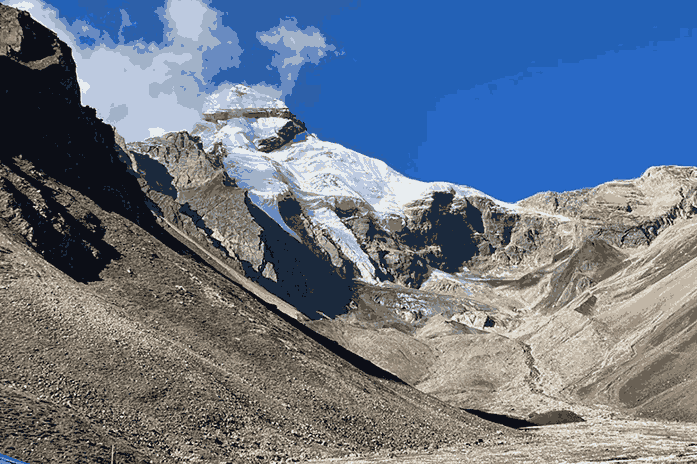
There's something deeply stirring about a mountain that mirrors the holiest peak in the Himalayas. Adi Kailash — also called Chota Kailash — stands at 6,191 metres in Uttarakhand's Pithoragarh district, so close to the Tibet border that it remains restricted to Indian citizens with a special permit. And yet, every year, thousands of pilgrims, trekkers, and spiritual seekers make the journey — because some experiences simply can't be replicated anywhere else.
If you've been searching for the Adi Kailash Yatra cost and found confusing, incomplete answers — you're not alone. Some websites throw big numbers without explaining what's included. Others list distances without telling you how much of it you actually walk. This guide changes that.
We'll walk you through every package option offered by Nagarjuna Travels, the costs based on where you're starting from, what's included, the complete 7-day itinerary, and a few honest tips nobody tells you before you book.
What Is Adi Kailash and Why Do People Go?
Before we talk money, it's worth understanding what makes this yatra so special.
Adi Kailash is revered as the Indian twin of Mount Kailash in Tibet — the sacred abode of Lord Shiva. For pilgrims who cannot undertake the Kailash Mansarovar Yatra (which crosses into Tibet and involves a much longer, costlier journey), Adi Kailash offers a deeply spiritual alternative on Indian soil.
The yatra also includes a visit to Om Parvat, where a natural snow formation shaped like the sacred 'ॐ' symbol appears on the mountain face. People who've seen it describe the moment as overwhelming — like the mountain itself is speaking to you.
This isn't just a trek. For most people who go, it's a life event.
Adi Kailash Trek Distance – How Much Do You Actually Walk?
This is one of the most misunderstood parts of the yatra. People hear "Himalayan trek" and imagine weeks of walking with a heavy pack. The reality is more balanced.
The total route from Dharchula to Jyolingkong covers roughly 120–130 km, but the vast majority of this is covered by 4x4 vehicles on mountain roads. The actual trekking on foot amounts to approximately 12–18 km, split across two main segments:
- Gunji to Jyolingkong (Adi Kailash base): approximately 12–15 km
- Gunji to Nabhidhang (Om Parvat viewpoint): approximately 5–6 km
The altitude gain is what makes it challenging — Jyolingkong sits at 4,750 metres above sea level. You're not dealing with a technical climb, but thin air is real. Acclimatise properly at Gunji before pushing forward.
Moderately fit adults — including those in their 50s and 60s — complete this yatra every season. The key is not rushing.
Adi Kailash Yatra Cost – Package-Wise Breakdown (Nagarjuna Travels)
Here's the full cost breakdown for the packages offered by Nagarjuna Travels, one of the most trusted operators for this route:
Budget / Standard Package
Cost: ₹27,000 – ₹30,000 per person Duration: 7 Days / 6 Nights Starting Point: Kathgodam / Haldwani
This is the most popular choice. You travel in a shared 4x4 vehicle with a small group, stay in standard hotels and homestays, and get all meals included. There's nothing "budget" about the experience itself — the darshan, the views, the spiritual atmosphere — all of it is identical to the premium packages. The only difference is shared rooms and standard-category hotels.
Ideal for: Solo pilgrims, young travellers, groups on a moderate budget.
Deluxe / Mount Kailash Darshan Package
Cost: ₹32,000 – ₹35,000 per person Duration: 7 Days / 6 Nights Starting Point: Kathgodam or Delhi
The deluxe package upgrades your accommodation in Pithoragarh and Dharchula to better-category hotels. Group sizes are typically smaller, which means a more relaxed pace. Additional sightseeing stops may be included depending on weather and time.
Ideal for: Families, senior pilgrims, anyone who values comfort after a long day on mountain roads.
Bike Expedition Package
Cost: ₹25,000 – ₹32,000 per person Duration: 6–7 Days Starting Point: Flexible
For the adventure seeker who wants to ride through the Himalayas rather than just pass through them. The bike expedition comes with a backup support vehicle, an on-call mechanic, and fuel coverage. You still visit every key stop — Adi Kailash, Parvati Sarovar, Om Parvat — but on two wheels, with the wind and the mountains all around you.
Prior high-altitude riding experience is strongly recommended. This isn't a city ride.
Ideal for: Adventure pilgrims, motorcycle enthusiasts, experienced riders seeking a spiritual challenge.
Adi Kailash Yatra Cost Based on Your Starting City
Your departure point plays a major role in the final cost. Here's how it breaks down:
| Starting Point | Duration | Cost | Best For |
|---|---|---|---|
| Delhi | 7–8 Days | ~₹32,000 | Outstation, groups |
| Kathgodam / Haldwani | 7 Days | ₹27K–30K | Most popular option |
| Pithoragarh | 3–5 Days | ₹15K–20K | Locals, nearby travelers |
| Pantnagar | Custom | On request | Air travelers |
If you're flying in from another city, Pantnagar Airport is your closest option — Nagarjuna Travels can customise a package with airport pickup included.
What's Included in Every Package?
Regardless of which package you choose, all Nagarjuna Travels Adi Kailash Yatra packages include:
Accommodation:
Hotels in Pithoragarh and Dharchula, plus homestays in Nabi or Gunji villages. Clean, safe, and locally managed.
Inner Line Permit (ILP):
This is mandatory to enter the border zone. The paperwork, processing, and coordination is handled entirely by the operator. You just need your Aadhaar card.
Meals:
Daily breakfast and dinner throughout the trip — all pure vegetarian. Lunch is typically on your own at local dhabas.
Transport:
4x4 vehicles (usually Boleros or similar) for the entire mountain route. Bike expeditions include a dedicated backup vehicle and mechanic.
Guide:
A local, experienced guide accompanies every group. This is not a GPS-and-go situation — the guides know the terrain, the culture, the weather patterns, and the safe shortcuts.
7-Day Adi Kailash Yatra Itinerary (Ex-Kathgodam)
Here's what a standard trip looks like, day by day:
Day 1 – Kathgodam to Pithoragarh Depart early morning. Drive through the beautiful Kumaon foothills. Arrive Pithoragarh by evening and check in. This town — often called "Little Kashmir" — sits at 1,814 metres and offers your first stunning Himalayan views. Rest well.
Day 2 – Pithoragarh to Dharchula Head to Dharchula for Inner Line Permit processing. This takes a few hours, so the morning is administrative — but the drive along the Kali River more than makes up for it. Overnight at Dharchula.
Day 3 – Dharchula to Gunji / Nabi Village Enter the restricted border zone. The landscape transforms dramatically — narrow roads, towering cliffs, glacial streams. Arrive at Gunji or Nabi for an acclimatisation night. Do not skip this. Your body needs it.
Day 4 – Gunji to Jyolingkong (Adi Kailash Darshan) The main event. Trek or drive to Jyolingkong (4,750 m) for your first darshan of the Adi Kailash peak. Visit the sacred Parvati Sarovar glacial lake. Take your time here — this is what you came for.
Day 5 – Gunji to Nabhidhang (Om Parvat Viewpoint) Early start for the trek to Nabhidhang. On a clear day, the natural 'ॐ' snow formation on Om Parvat is clearly visible. Many pilgrims describe this as the most emotional moment of the entire yatra. Return to Gunji by evening.
Day 6 – Gunji to Dharchula to Pithoragarh Begin the descent back. Stop at local markets in Dharchula. The return drive feels different — quieter, more reflective. Overnight at Pithoragarh.
Day 7 – Pithoragarh to Kathgodam (Departure) Final drive back through the Kumaon hills. Drop at Kathgodam railway station or Pantnagar airport as per your onward journey.
Key Locations You'll Visit
Pithoragarh
is the cultural and administrative gateway to the yatra. At 1,814 m, it's a charming hill town with a fort, local temples, and a warm community. Many travellers wish they'd planned an extra night here.
Dharchula
sits right on the Indo-Nepal border, split by the Kali River. It's a busy border town with a mix of Indian and Nepalese culture. This is your last ATM stop — withdraw enough cash for the entire yatra.
Gunji and Nabi Village
are high-altitude settlements that serve as your acclimatisation base. The local homestay families here are incredibly warm and make you feel genuinely welcome — not just like a tourist passing through.
Jyolingkong
is where the yatra reaches its spiritual peak. The view of Adi Kailash — its triangular snow-capped summit — rises dramatically from the valley. The Parvati Sarovar nearby is considered sacred, and pilgrims take a symbolic dip in its freezing waters.
Nabhidhang
is the viewpoint for Om Parvat, and on a clear day, it delivers. The 'ॐ' formation in the snow is not painted or created — it forms naturally every season. Whether you're a believer or not, the sight is genuinely awe-inspiring.
Best Time to Visit
May to June is the most popular window. Roads are accessible, skies are mostly clear, and the snow at higher altitudes is still fresh and photogenic. Book at least 45–60 days in advance for this period — permits and packages fill up fast.
September to October is the best-kept secret among experienced trekkers. The monsoon has cleared, the air is crisp, visibility is excellent, and crowds are thinner. If flexibility allows, this is the ideal time.
July to August brings heavy monsoon rains and serious landslide risk on mountain roads. Most responsible operators suspend tours during this period.
November to April — the route is snowbound and inaccessible. No tours operate.

Hidden Costs to Plan For
Your package covers the big items, but here are the additional costs you should budget for:
- Personal medicines: Altitude sickness tablets (Diamox — only on doctor's advice), ORS, basic first aid. Budget ₹500–₹1,500.
- Warm clothing: Thermal inner layers, fleece jacket, gloves, and a good windproof outer layer are non-negotiable. If you don't own these, budget ₹2,000–₹5,000.
- Travel insurance: Standard travel insurance rarely covers high-altitude trekking. Get a dedicated policy. Budget ₹800–₹2,000.
- Temple offerings: Completely personal, but budget ₹500–₹2,000 if you plan to make offerings at the temples.
- Tips for local staff: Guides, drivers, and homestay helpers work hard in difficult conditions. ₹500–₹1,000 per person is customary and deeply appreciated.
- Lunch: Most packages cover breakfast and dinner. Lunch at local dhabas costs ₹100–₹200 per meal.
Documents You'll Need
The Inner Line Permit is non-negotiable, and only Indian citizens can obtain one. Here's what you need to carry:
- Valid government photo ID (Aadhaar card is the most commonly accepted)
- Passport-size photograph (carry 4–6 copies)
- Basic medical fitness declaration (some operators require this)
Nagarjuna Travels handles the actual ILP processing — you just need to provide your documents in advance of departure.
A Few Honest Tips Before You Book
Don't underestimate the altitude. 4,750 metres is serious. Even if you're fit and healthy, your body may react to thin air. Headaches, fatigue, and nausea are common. Acclimatise properly at Gunji and never push if you feel unwell.
Carry cash. Dharchula has ATMs, but beyond that, there's no banking infrastructure. Mobile networks are weak or absent in the restricted zone. Let your family know you may be unreachable for a day or two.
Pack light but pack right. You don't need much, but what you bring matters. Layered warm clothing, sturdy trekking shoes, a good water bottle, and sunscreen for high altitude are essentials.
Respect the local culture. The villages of Gunji and Nabi are home to communities that have lived in these mountains for generations. Dress modestly, ask before photographing locals, and leave no plastic waste on the trail.
Book through a registered operator. The Adi Kailash route passes through a sensitive border zone. Your operator needs to be registered and authorised to process ILPs. Nagarjuna Travels is a trusted, experienced specialist on this route.