
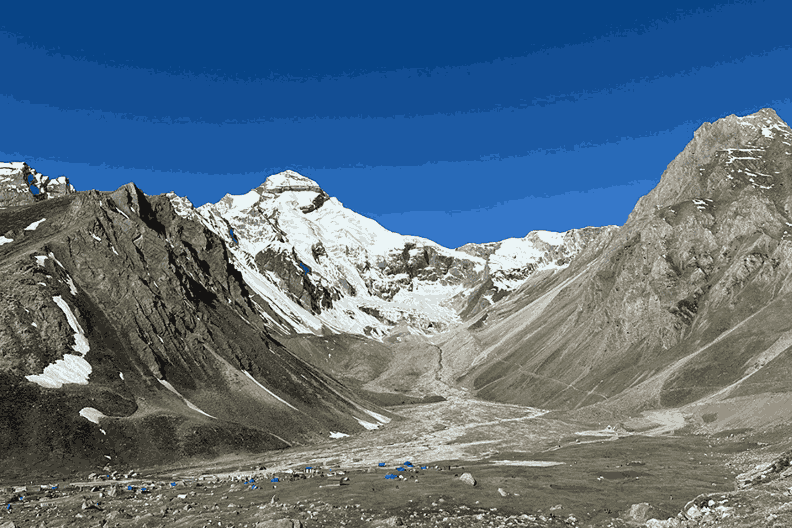
The moment you decide to undertake this sacred journey, the first thing that crosses your mind is — how far do I actually have to walk? The Adi Kailash trekking distance begins from Gunji, the last point accessible by vehicle. From Gunji, the trail stretches roughly 30 km one way to Jolingkong — the sacred meadow that offers a full face-to-face view of the holy peak. This makes the total round-trip trek approximately 60 km, usually completed over 3 to 4 days of walking.
The path passes through Kuti village, glacial streams, dense forests, and wide open alpine meadows before the mountain finally reveals itself. It is not a casual walk — but it is absolutely manageable for anyone in moderate physical fitness with proper preparation.
| Route Segment | Distance (Approx.) |
|---|---|
| Gunji → Kuti Village | 12 km |
| Kuti Village → Jolingkong Base Camp | 15 km |
| Jolingkong → Adi Kailash View Point | 3–4 km |
| Total One-Way Trek | ~30 km |
| Total Round Trek | ~60 km |
Adi Kailash Distance by Road
Before the trek even begins, there's a long and stunning drive through the Kumaon Himalayas. The Adi Kailash distance by road from Dharchula — the nearest major town — to Gunji is around 90 km. This road runs alongside the Kali River through dramatic gorges and mountain passes, all under the watch of the Indo-Tibetan Border Police (ITBP).
The road is narrow in sections and mountain conditions apply, but it is navigable by jeeps and similar vehicles. Plan for roughly 4 to 5 hours of driving from Dharchula to Gunji. Beyond Gunji, no vehicles are permitted — the trek is the only way forward.
Delhi to Adi Kailash Distance: Planning Your Journey
For most pilgrims and travellers, the journey starts from Delhi. The Delhi to Adi Kailash distance by road totals approximately 690 km to reach Gunji, the trek's starting point. This is typically broken into a comfortable 2 to 3 day road journey with overnight halts recommended at Pithoragarh or Dharchula.
| Places | Distance |
|---|---|
| Delhi → Kathgodam | ~300 km |
| Kathgodam → Pithoragarh | ~205 km |
| Pithoragarh → Dharchula | ~95 km |
| Dharchula → Gunji | ~90 km |
| Total | ~690 km |
If driving isn't your preference, an overnight train from Delhi to Kathgodam is a comfortable option, followed by a shared jeep or cab toward Dharchula. There is also a flight option — fly into Pantnagar Airport (the closest airport to the region), then continue by road. However, most seasoned yatris prefer the full road journey from Delhi. The mountain scenery along the way is part of the experience itself.
For a seamless, permit-inclusive journey, explore Adi Kailash Yatra packages that handle transport, stays, and logistics end to end.
Adi Kailash Height in Feet
Standing at 6,191 meters — or 20,312 feet above sea level, Adi Kailash is a towering Himalayan presence that commands both awe and reverence. While the summit itself is not climbed by pilgrims, the trek takes you to Jolingkong base camp at roughly 4,750 meters (15,584 feet), from where the sacred peak stands fully visible against the open sky.
The altitude is significant and should not be taken lightly. Trekkers gain nearly 1,500 meters in elevation from Gunji to Jolingkong, which means acclimatization is not optional — it is essential. Spending at least one full day at Dharchula or Gunji before beginning the trek makes a real difference to your body's adjustment.
Adi Kailash to Kailash Mansarovar Distance
This is one of the most common comparisons people make, and it is worth addressing clearly. Adi Kailash and Kailash Mansarovar are two entirely different sacred sites. Adi Kailash is located within the Pithoragarh district of Uttarakhand, India. Kailash Mansarovar lies in Tibet, China. The straight-line distance between the two is approximately 1,200 km, and by road, the journey is even longer and far more complex.
| Feature | Adi Kailash | Kailash Mansarovar |
|---|---|---|
| Location | Uttarakhand, India | Tibet, China |
| Height | 6,191 m (20,312 ft) | 6,638 m (21,778 ft) |
| Distance from Delhi | ~690 km | ~2,400+ km |
| Permit Needed | Inner Line Permit (ILP) | Chinese Visa + Special Permit |
| Cost | Moderate | Very High |
What makes Adi Kailash so special is that Hindu scriptures regard it as the original abode of Lord Shiva — the place where he dwelled before moving to the Tibetan Kailash. Visiting Adi Kailash is believed to carry the same spiritual merit as the Kailash Mansarovar Yatra, without the need for a foreign visa or the significant cost that comes with Tibet travel. For most Indian pilgrims, it is the most accessible and deeply fulfilling Himalayan pilgrimage available today.
Best Time to Do the Adi Kailash Trek
The mountain is accessible only during two seasonal windows. May to June is the most popular period — skies are clear, views are sharp, and the landscape is covered in lingering snow. September to October is equally rewarding, with lush green valleys freshly washed by the monsoon and excellent visibility.
The monsoon months of July and August bring heavy rainfall, making the trails muddy and increasing the risk of landslides along the road sections. From November onward, heavy snowfall closes the route until the following spring. Planning within the two recommended windows ensures both safety and the best experience.

Permits and Important Regulations
Adi Kailash sits in a sensitive border zone close to the India-China-Nepal trijunction. An Inner Line Permit (ILP) is mandatory for all Indian nationals. Foreign nationals face additional restrictions and generally require special authorization to visit this region.
Permits can be arranged at the SDM office in Dharchula or, more conveniently, through a registered tour operator before your trip. Attempting the trek without a valid permit is not permitted and can result in being turned back at checkpoints along the road. Booking through a reliable operator like Adi Kailash Yatra ensures your paperwork is handled correctly from the start.
Frequently Asked Questions
Q1. What is the total Adi Kailash trek distance?
The total round-trip trekking distance from Gunji to Jolingkong and back is approximately 60 km, covered over 3 to 4 days of trekking.
Q2. What is Adi Kailash height in feet?
Adi Kailash stands at 6,191 meters, which is 20,312 feet above sea level. The base camp at Jolingkong sits at around 4,750 meters (15,584 feet).
Q3. What is the Delhi to Adi Kailash distance by road?
The road distance from Delhi to Gunji — the trek starting point — is approximately 690 km, typically completed over 2 to 3 days with overnight stops.
Q4. Is Adi Kailash the same as Kailash Mansarovar?
No. They are separate sacred mountains. Adi Kailash is in Uttarakhand, India, while Kailash Mansarovar is in Tibet, China — approximately 1,200 km apart.
Q5. Can the entire Adi Kailash journey be done by road?
The route from Delhi to Gunji is fully by road (~690 km). Beyond Gunji, the remaining 30 km one way must be trekked on foot — no vehicles are allowed past this point.
Q6. What is the best time for Adi Kailash Yatra?
May to June and September to October are the ideal seasons. Monsoon months carry landslide risk and the route remains closed from November to April due to snow.
Q7. Do I need a permit for Adi Kailash?
Yes. An Inner Line Permit (ILP) is mandatory for all travellers, including Indian citizens, as this is a protected border area.
Q8. How do I book an Adi Kailash Yatra package?
You can book a complete package — including permits, transport, accommodation, and guide — at adikailash-yatra.com.
Your Sacred Journey Starts Here
The distances are real — 690 km of mountain roads from Delhi, 60 km of trekking through the Himalayas, and a peak standing 20,312 feet above the world. But every kilometre of this journey carries a weight that goes beyond the physical. Adi Kailash is one of those rare destinations where the effort and the reward feel perfectly matched.
If you are ready to take that step, Adi Kailash Yatra is here to make the journey smooth, safe, and spiritually complete.