Kailash Mansarovar Yatra Package by Road from Kathmandu
A Journey beyond the material world.
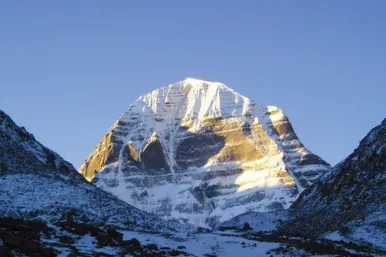
At the roof of the world, where Nepal's Himalayan border meets the vast Tibetan plateau, lies the most sacred mountain in human history. Mount Kailash — Kailash Parvat — rises to 6,638 metres in the Ngari Prefecture of Tibet, a perfectly pyramidal peak of such symmetry and solitude that it has drawn pilgrims from four traditions across four millennia: Hindu, Buddhist, Jain, and Bon. It is believed to be the cosmic axis of the universe, the eternal abode of Lord Shiva, the mountain that no living being has ever summited — not because it cannot be climbed, but because no one dares. At its foot lies Lake Mansarovar: the highest freshwater lake in the world, born in the mind of Lord Brahma, a body of water so pure that a single dip is said to wash away the sins of a hundred lifetimes. Our Kailash Mansarovar Yatra Package — 14 Days / 13 Nights, by road via Kathmandu, Syabrubesi, and Kyirong — is designed for the pilgrim who chooses not just to arrive at Kailash, but to earn it. From the ancient temples of Kathmandu to the prayer-flag-draped passes of the Tibetan plateau, this overland journey unfolds as the yatra was meant to be: gradually, reverently, and completely. Om Namah Shivaya.
About Mount Kailash — Mythology & Geography
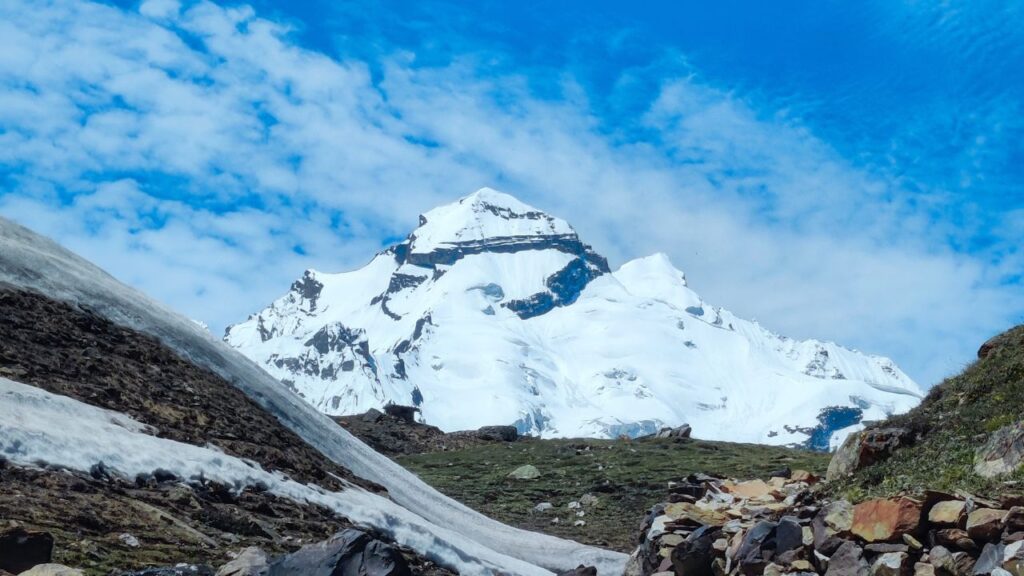
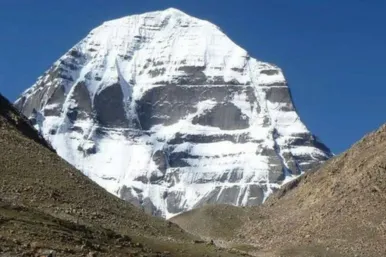
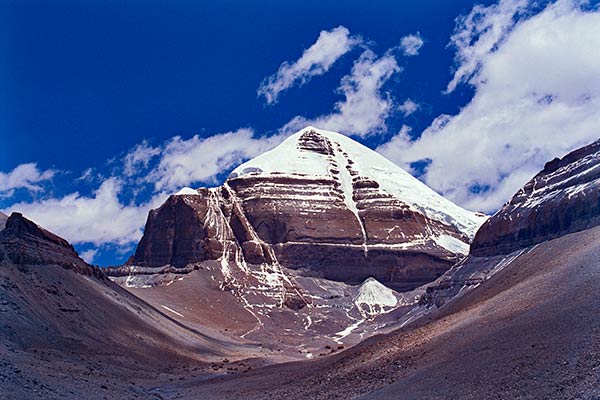
Mount Kailash (Kailash Parvat) rises to 6,638 metres in the Ngari Prefecture of the Tibet Autonomous Region of China, in the western Himalayas. Part of the Transhimalayan range, it stands largely isolated — a pyramidal peak of extraordinary symmetry that appears almost supernatural in its geometry. No human being has ever climbed to its summit — not because it is technically impossible, but because every attempt has been abandoned out of reverence. It is considered so sacred by Hindus, Tibetan Buddhists, Jains, and followers of the Bon faith that to summit it would be an act of profound desecration. In Hindu tradition, Kailash is the home of Lord Shiva — where he sits in eternal meditation with Goddess Parvati. The Kailash Yatra is considered the ultimate pilgrimage — beyond Char Dham, beyond Amarnath — because it is the journey to the very source
why choose this Kailash Mansarovar Yatra Package by Road from Kathmandu
There are several routes to Kailash Mansarovar — the MEA lottery route via Lipulekh (22+ days), the helicopter route via Nepalgunj (9 days), and the overland route via Kathmandu, Syabrubesi, and Kyirong. The Kyirong overland route is the most scenic, the most culturally immersive, and — crucially — the most medically sound. Because it involves gradual altitude gain over several days (Kyirong at 1,600m → Gyirong at 2,800m → Saga at 4,500m → Mansarovar at 4,590m), your body acclimatises naturally, reducing the risk of altitude sickness that can affect pilgrims who ascend too quickly by helicopter. Starting from Kathmandu, the journey begins with Pashupatinath Temple darshan and Bouddhanath Stupa — spiritual preparation before the sacred mountain. Then the road winds through Nepal's remote western valleys, crosses the Nepal-Tibet border at Kyirong, and unfolds across the Tibetan plateau toward Mansarovar and Kailash. You still complete the full 52 km Kailash Parikrama on foot — but you arrive having already lived the yatra. This is the complete pilgrimage. Om Namah Shivaya.
Sacred Sites on the Kailash Mansarovar Route
- Pashupatinath Temple Darshan, Kathmandu Morning aarti and optional Rudrabhishek puja at one of the holiest Shiva temples in the world — spiritual preparation before the sacred mountain. A powerful beginning to the yatra.
- Bouddhanath Stupa, Kathmandu UNESCO World Heritage Site and one of the largest Buddhist stupas in the world. A profound stop that acknowledges the multi-religion sanctity of the Kailash Yatra.
- Kyirong Border Crossing The Nepal-Tibet border at Kyirong — the gateway into Tibet. A threshold moment where the landscape transforms from lush Himalayan Nepal to the vast, dramatic Tibetan plateau.
- Brahmaputra River Crossing, Saga Crossing the Yarlung Tsangpo (Brahmaputra) — one of the great rivers of Asia — on the drive to Saga across the Tibetan plateau. An extraordinary geographical moment
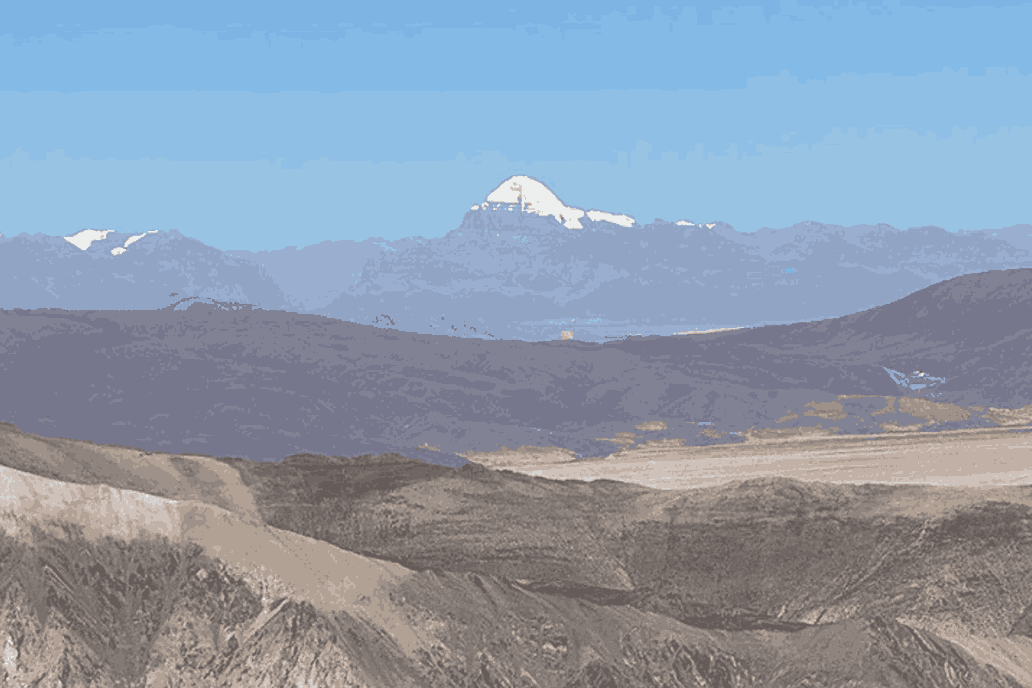
- First View of Lake Mansarovar The moment Lake Mansarovar appears after the long drive across Tibet — a vast expanse of brilliant blue-green water at 4,590m, with Kailash Parvat rising on the northern horizon. A sight pilgrims describe as unlike any other on earth.
- Holy Dip at Lake Mansarovar (4,590m) Pre-dawn sacred bath in the world's highest freshwater lake, believed to wash away the sins of a lifetime. Puja ceremony and Homa (sacred fire ritual) at the lakeside at sunrise.
- Mansarovar Parikrama by Vehicle (102 km) Full circumambulation of Lake Mansarovar, stopping at sacred ghats including Chiu Gompa — the dramatic clifftop monastery above the lake. Pass Rakshas Taal — the dark 'demon lake'.
- North Face of Kailash from Derapuk The most awe-inspiring mountain view in world pilgrimage — the sheer vertical north face of Kailash Parvat seen from the Derapuk valley on Parikrama Day 1
- Dolma La Pass Crossing (5,630m) The spiritual and physical summit of the entire yatra — the Dolma La pass draped in prayer flags, the highest point of the Kailash Parikrama. Named for Dolma (Tara), the Tibetan goddess of compassion.
- Gauri Kund at 5,608m The sacred glacial lake near Dolma La, associated with Goddess Parvati — visited on the descent from the pass during Parikrama Day 2.
- Yam Dwar — Gate of the Parikrama The ceremonial stone gateway at Darchen marking the beginning of the Kailash Kora — crossing Yam Dwar officially begins the circumambulation.
- Saptarishi Caves, Zuthulpuk Ancient meditation caves near the final Parikrama camp, associated with the seven great Vedic sages — a profound spiritual close to the Kora.
- Gradual Acclimatisation Route The Kyirong overland route is medically superior to helicopter routes — altitude gain is gradual (1,600m → 2,800m → 4,500m → 4,590m), significantly reducing altitude sickness risk.
- Pure Satvik Vegetarian Meals All meals throughout 14 days are pure satvik vegetarian, cooked by your dedicated team — no onion, no garlic, a standard of spiritual food preparation maintained across the entire journey.
A Sacred Progression
Day 1: Arrival in Kathmandu
Day 2: Kathmandu Temple Darshan
Day 3: Kathmandu → Kyirong (Nepal-Tibet Border)
Day 4: Kyirong → Cross Border → Gyirong County (Tibet)
Day 5: Gyirong County — Acclimatisation
Day 6: Gyirong → Saga (via Brahmaputra River
Day 7: Saga → Lake Mansarovar
Day 8: Mansarovar Parikrama → Holy Dip → Drive to Darchen
Day 9: Darchen → Derapuk — Parikrama Day 1
Day 10: Derapuk → Dolma La (5,630m) → Zuthulpuk — Parikrama Day 2
Day 11: Zuthulpuk → Darchen → Saga — Parikrama Day 3
Day 12: Saga → Gyirong County
Day 13: Gyirong County → Border → Kathmandu
Day 14: Kathmandu → Departure
Inclusions & Logistics
What's Provided
Nepal Portion:
- Airport transfers in Kathmandu
- 3-night stay in Kathmandu (3-star, sharing basis) with pure vegetarian meals (B/L/D)
- Temple visits in Kathmandu
- Kathmandu-Kyirong (Kerung) border transfers by non-A/C bus
- 1-night guesthouse stay in Timure/SyabruBesi with local veg meals
Tibet Portion:
- 3 nights in Kyirong hotel, 2 nights in Saga hotel, and 1 night each at Lake Mansarovar, Darchen, Dirapuk, Zuthulpukh with vegetarian meals
- Light breakfast, packed lunches, and dinners during parikrama days
- Luxury A/C Tibetan bus transportation and support truck
- English-speaking Tibetan guide, Nepali tour leader, cook, helper, and Sherpa
- First aid kit and oxygen cylinders for emergencies
- Required travel permits, Tibet single-entry group visa
- Nepal-China border tax and all relevant taxes
Not Included
- Any kind of Medical Insurance or Emergency during the trip
- Extra beverages and Orders during the Tour
- Any extra day accommodation (if required)
- Anything that is not written in Inclusions
Frequently Asked Questions
Pure Spirit. Pure Comfort.
We redefine the Yatra experience by merging deep spiritual values with high-end concierge support.
Consult an Expert