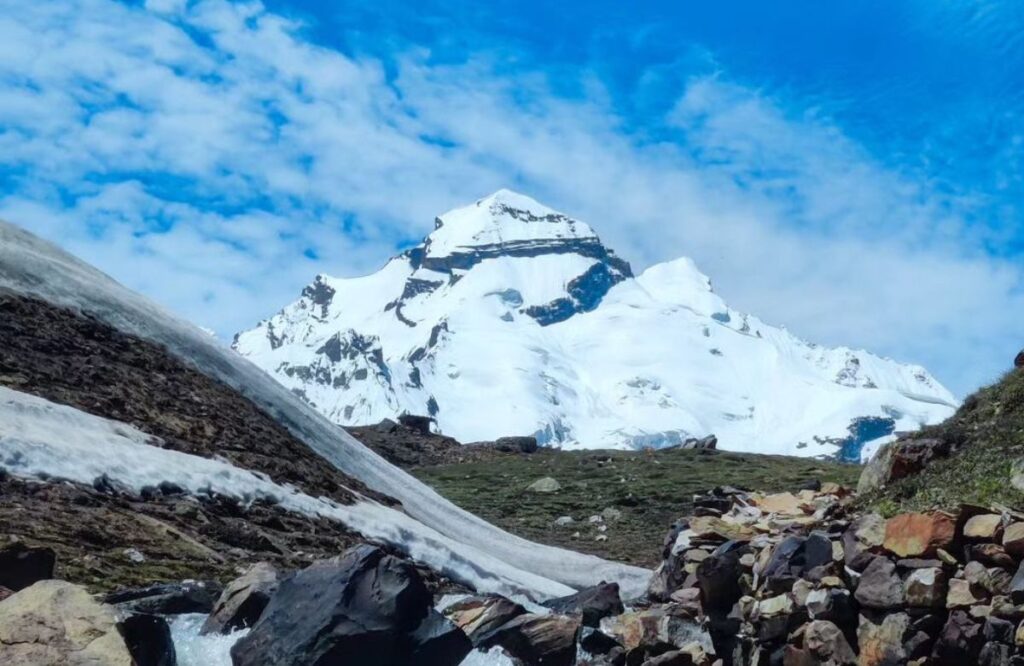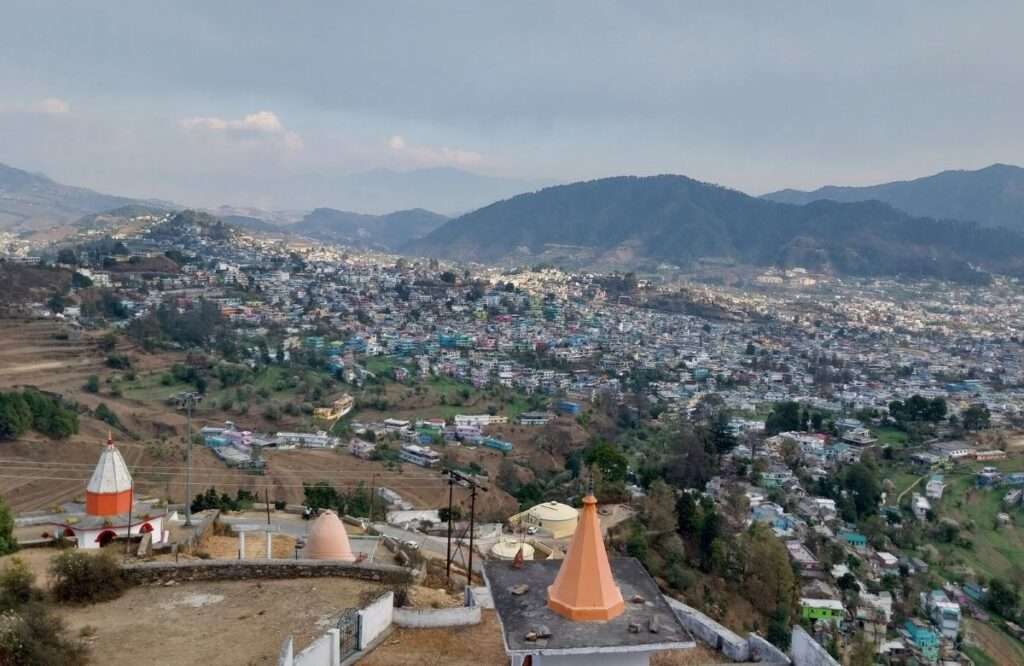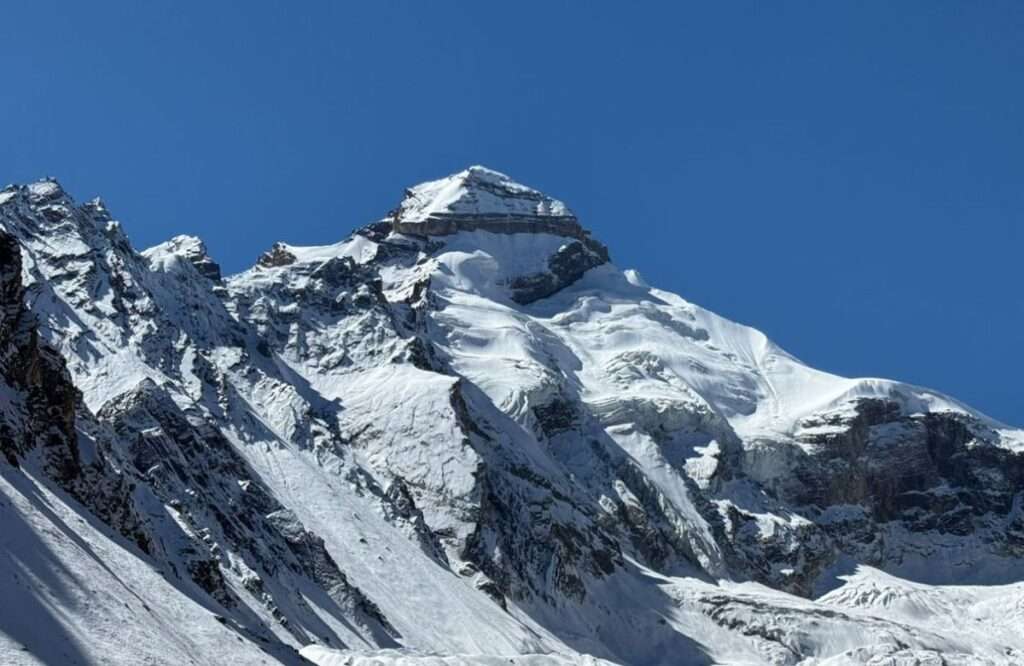
The Adi Kailash Yatra, also known as Chota Kailash Yatra, is one of the most spiritually profound and visually enchanting journeys in the Indian Himalayas. Situated in the far-eastern Kumaon region of Uttarakhand, very close to the India–Tibet border, Adi Kailash holds deep significance for Hindu devotees. It is revered as the earthly replica of Mount Kailash in Tibet and is believed to be the sacred abode of Lord Shiva and Goddess Parvati. Thousands of pilgrims travel every year to seek blessings at Adi Kailash and Om Parvat—two major highlights of this divine circuit. With the growing interest in 2026 pilgrimages, one of the most important aspects every traveler must know is the opening and closing dates of Adi Kailash Yatra 2026, so they can plan their journey smoothly and safely.
This comprehensive guide will help you understand the ideal travel window, monsoon risks, seasonal changes, weather patterns, and the best time to plan the Adi Kailash Yatra in 2026. Whether you are a first-time pilgrim, an adventure traveler, or someone preparing a group yatra, this detailed article will ensure your planning becomes easier and more informed.
Adi Kailash Yatra Opening & Closing Dates 2026
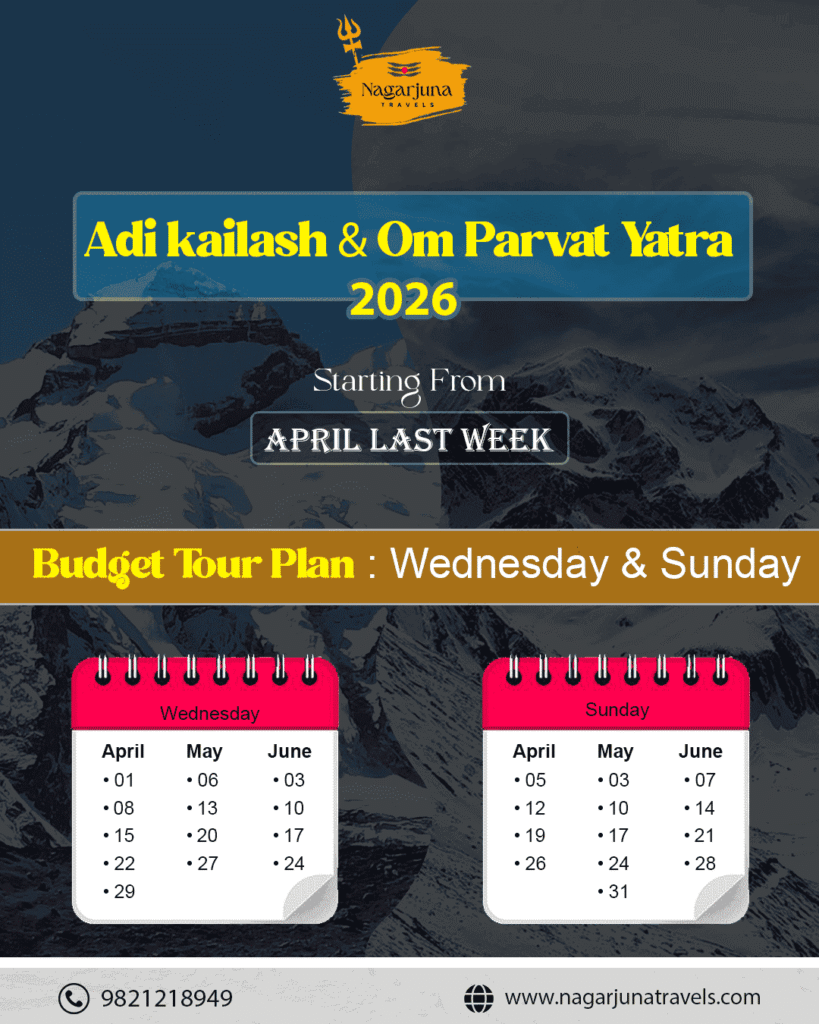
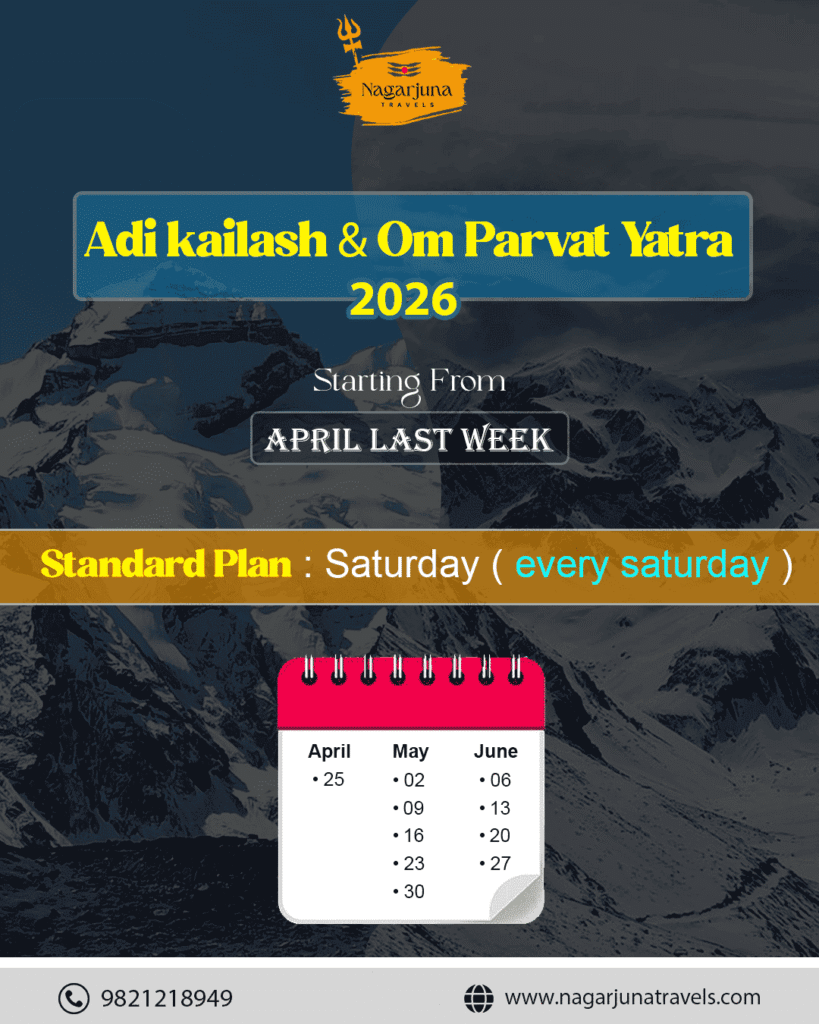
Based on the weather cycle, snow clearance timelines, BRO road-maintenance schedules, and past operational patterns, the Adi Kailash Yatra 2026 is expected to follow this schedule:
- Opening Date: First week of May 2026
- Closing Date: Mid-November 2026
These dates represent the time period when the Himalayan routes are accessible, safe, and approved for civilian pilgrimage movement. The region experiences extreme winters and heavy snowfall during December–March, making it impossible for tourist or pilgrimage activities. Hence, the yatra window is limited to roughly six and a half months, with specific recommended months for safe travel.
Why the Yatra Starts in the First Week of May
The first week of May marks the transition from winter to spring in high-altitude regions like Dharchula, Gunji, Nabi, Napalchu, Chialekh, and Jyolingkong. These areas receive heavy snowfall from November to March. As the temperature rises in April, snow begins to melt, but it still takes time for roads to clear and conditions to stabilize. BRO (Border Roads Organisation) and PWD both work continuously during March–April to repair landslides, fix broken roads, construct temporary bridges, and prepare the trail for safe civilian travel.
By early May:
- The snow has sufficiently melted from the upper terrains.
- Weather becomes more predictable and stable.
- The routes from Dharchula to Gunji and onward to Adi Kailash become open for motor movement.
- Homestays, dhabas, and local shelters begin operations for the new season.
- Inner Line Permit (ILP) permissions become active and manageable.
This combination makes May the most anticipated month for the first yatras of the season. It is also a period when natural beauty is at its peak—the landscape is fresh, green, and full of energy after the long winter.
Why the Yatra Ends by Mid-November
The Himalayan climate is known for sudden changes, but post-Diwali (usually in early to mid-November), the weather begins shifting dramatically. Temperatures drop sharply, especially beyond Bundi, Nabi, and Gunji. As higher altitudes like Jyolingkong begin receiving fresh snow, the routes become dangerous for travel. Even a small amount of fresh snowfall in high-altitude areas can block roads and increase risks drastically.
By mid-November:
- Temperatures fall below freezing during the night.
- Water sources begin to freeze.
- Strong cold winds blow across the valley.
- The upper villages gradually shut down.
- Local residents migrate to lower areas for winter.
- BRO halts maintenance due to extreme cold.
Thus, for safety and survival reasons, all pilgrimage activities officially stop by mid-November, and the region remains inaccessible until the next spring. Attempting to travel beyond this time is neither advisable nor allowed by local authorities.


Why You Should Avoid Traveling in July and August (Monsoon Season)
Although the yatra technically remains open during July and August, this period falls under the peak monsoon season in Uttarakhand. The entire Kumaon Himalayan belt—from Pithoragarh to Dharchula and upward toward Gunji—becomes highly vulnerable during monsoons.
The following risks make July and August the least suitable months for the Adi Kailash Yatra:
High Landslide Probability
The region has many landslide-prone zones such as:
- Dharchula–Tawaghat stretch
- Tawaghat–Bundee
- Malpa
- Budhi
- Chialekh cliffs
Heavy rain softens the mountain soil, resulting in frequent landslides and road blockages that may last from a few hours to several days.
River Swelling
The Kali River, which flows parallel to the route, swells massively during monsoon, increasing the risk around bridges and narrow passages.
Frequent Road Closures
Continuous rain leads to:
- Road collapses
- Falling rocks
- Long stretches of mud-covered routes
- Delayed movement of vehicles
Travelers often get stuck for long hours, causing fatigue and extended travel days.
Poor Visibility & Safety Risks
Thick clouds, fog, and continuous rain reduce visibility, making it unsafe for driving and trekking.
Travel Discomfort
Monsoon does not only affect safety—comfort levels also drop significantly:
- Muddy trails
- Damp weather
- Insect issues
- Wet clothing and gear
- Travel delays
For these reasons, July and August are strongly not recommended unless absolutely necessary.
Best Time to Visit Adi Kailash in 2026
To ensure a comfortable, safe, and spiritually uplifting journey, the ideal months for Adi Kailash Yatra in 2026 are:
- May
- June
- September
- October
- Early November
These months offer:
- Pleasant weather
- Clear skies
- Stable road conditions
- Beautiful landscapes
- Higher chances of smooth darshan
- Comfortable stay options at Gunji, Nabi, and surrounding villages
May and June are known for fresh landscapes and vibrant greenery. September and October bring crystal-clear mountain views, and early November offers a winter-like scenic charm, making every moment magical.
Season-wise Breakdown for Adi Kailash Yatra 2026
May – Early June: Spring & Opening Season
- Fresh green valleys
- Snow-capped Adi Kailash peaks
- Mild temperatures
- Best for photography
- Easier road conditions
It is one of the most popular periods for the first yatras of the season.
Mid-June – June End: Pre-Monsoon Window
- Beautiful clear skies
- Occasional showers
- Good for calm, spiritual travel
- Less tourist rush compared to May
July – August: Monsoon (Not Recommended)
- High landslide chances
- Road blockages
- Poor visibility
- Travel discomfort
Unless unavoidable, avoid these two months completely.
September – October: Post-Monsoon Golden Season
- Crystal-clear mountain views
- Best visibility of Adi Kailash & Om Parvat
- Cool, stable weather
- Lush greenery after monsoon wash
- Perfect for photography and trekking
Many consider this the best time for Adi Kailash Yatra.
Early November: Beginning of Winter
- Snow begins appearing at higher reaches
- Crisp cold weather
- Mesmerizing vistas
- Ideal for those who prefer peaceful travel
Travel still remains safe until mid-November, after which the region shuts down.
The Importance of Knowing the Official Yatra Dates
Many travelers underestimate the role of opening and closing dates, assuming the yatra can be done anytime during the summer months. However, the Adi Kailash & Om Parvat region is unlike regular destinations. It lies extremely close to the Indo–Tibetan border, and the terrain is remote, sensitive, and governed by strict permissions. Knowing the correct travel window helps you:
- Plan transportation to Dharchula
- Secure Inner Line Permits (ILP)
- Ensure safety by avoiding monsoon
- Choose the right season for your comfort
- Prepare physically for high-altitude travel
- Book homestays/resorts well in advance
- Coordinate with your tour operator
Nagarjuna Travels recommends planning at least 45–60 days in advance, especially if you are traveling in May–June or September–October.
Final Tips for a Smooth Adi Kailash Yatra 2026 (Written as a Single Paragraph)
When planning your Adi Kailash Yatra in 2026, make sure to prepare thoroughly as the journey involves high altitudes, unpredictable climate, and remote terrains. It is advisable to keep track of weather updates and local BRO advisories, carry essential warm clothing even during summer, stay hydrated, and maintain a slow, steady pace to avoid altitude sickness. Choose a trusted operator like Nagarjuna Travels to ensure proper permits, verified accommodations, and guided support throughout the route. Pack light but include all essentials such as medicines, ID proofs, rain protection, sturdy shoes, and emergency snacks. Prepare mentally for long travel hours and limited mobile network connectivity. Most importantly, respect the local culture, stay patient during unforeseen road delays, and let the serene spirituality of the Himalayas enhance your entire experience.